Germie Bernard, WR vs #16 Vanderbilt (2025)
Overview
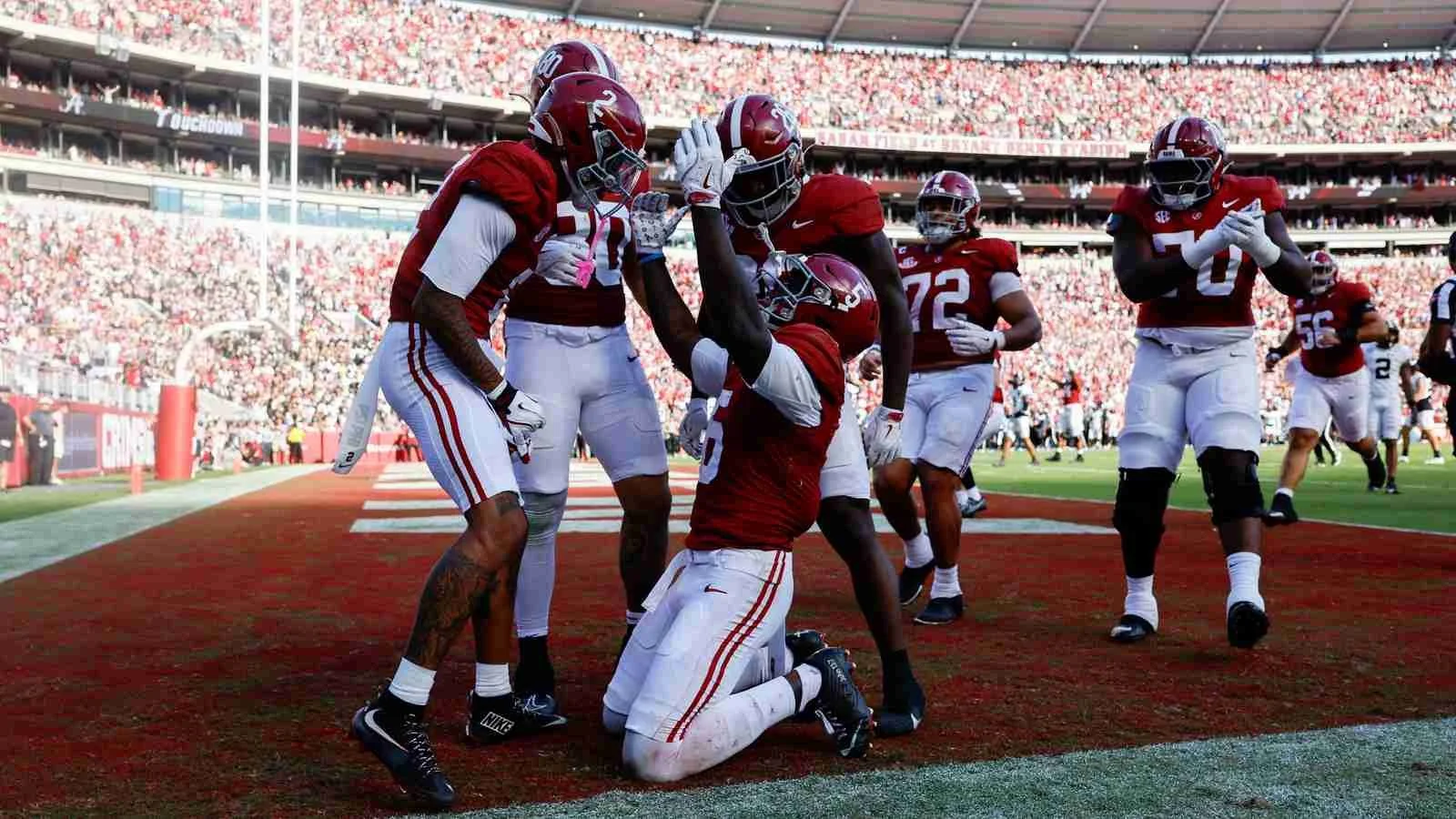
Player: Germie Bernard — WR, Alabama
Height: 6’1”
Weight: 205
Opponent: #16 Vanderbilt
Season: 2025
Final Stat Line: 5 Catches, 82 Yards, 1 TD
Film Link: Watch on YouTube
Bernard puts a clean perimeter-timing and zone-awareness profile on film against Vanderbilt. His cuts are crisp outside, he understands where the soft spots are between levels in zone coverage, and presents a big, friendly window to the QB. We also see vertical speed paired with in-stride tracking and enough strength to finish through contact at the goal line. In clutch situations, he’s reliable—good timing with his QB, creating separation, and securing passes thrown his way.
Usage / Alignment: Boundary both sides (wide left/right). Concepts on this cut: boundary vertical (go), deep sideline hole vs zone, 10-yard in.
Film Review — Key Plays
Play 1) 13:40 2Q, 3rd & 3 — 15 Yard Catch
Wide right on a deep route down the sideline; Bernard slips past the CB in press coverage, then finds himself open between the layers in the zone, and presents a big target for his QB. He snags it on the hash marks, absorbs contact, and goes out of bounds. It’s a clutch down perimeter play: beat the underneath coverage, find the soft spot in the zone, and complete the catch through contact to pick up the first and more. Catch mechanics are tidy, and there’s no bobble to invite a breakup.
Play 2) 0:23 2Q, 1st & 10 — 27 Yard TD Catch
Wide left on a go. Much like the first play, he gets open between levels in zone coverage and tracks it in stride down the sideline - but this time he’s able to carry speed through the catch. At the goal line, he powers through contact and finishes for the TD. The in-stride catch turns a shot into a touchdown because he doesn’t have to slow down, and his momentum carries him into the endzone.
Play 3) 5:36 3Q, 3rd & 9 — 20 Yard Catch
A different look here, Bernard starts wide right on a 15-yard in. He attacks vertically, breaks so sharply that the corner loses his footing, and gets wide-open. From there, he makes a great catch, high-pointing the ball, and secures it before the traffic arrives, getting taken down in the secondary. It’s third-and-long route maturity: disciplined stem to sell vertical, sudden change of direction to win separation, and clean catch mechanics. The result is a high-leverage conversion built on pacing and precision.
Final Thoughts
Within a small sample, Bernard checks the boxes for a timely boundary option that beats zone, separates on intermediate cuts, and finishes at the pylon. The tools here are translatable: quick moves off the line, precision route running, and catch mechanics that his QB can rely on. The next step is showing a broader deployment (stacks/bunch, varied stems) and more contested/traffic reps to round out the outside profile.
Strengths on Display
Outside Threat: Uses leverage and discipline to win along the sideline and makes perimeter routes easy to target for his QB.
Vertical Separation vs Zone: Understands spacing/safety depth, uncovers between levels, and tracks the ball in stride.
Route Running: Crisp route running with sudden breaks creates separation and allows for chain-moving throws.
Finish Through Contact: Shows he’s willing to take a hit and hang onto the ball, including at the goal line.
Areas for Improvement
Route Tree Breadth: Add digs/outs from different releases & more intermediate middle work to his tape.
Alignment Variety: Increase left/right balance and mix in stacks/bunch to vary leverage looks and reduce predictability.
Contested/Traffic Sample: Put more through-contact finishes on tape to validate reliability when windows tighten.
